
Sunday, February 27, 2011

Amazing Secrets of Underwater Photography


Cuba Gallery: Clouds / plane / blue sky / photography by ►CubaGallery


Photo Credit: celtics baby clothes


Do you like underwater photography? Do you want to know how it is done and what are the different things you should look out for when taking underwater pictures? Then you have come to the right place to learn what really underwater photography is. We all know that underwater photography can be a great fun and enjoyment activity and it can be more enjoyable experience for you if you really know all the nitty-gritty about underwater photography.

If you want to take beautiful underwater pictures then most importantly you should have a powerful digital camera which can work underwater without any hassles. Because it is not like that you go underwater and immediately start taking pictures. Rather you have to take care of many things when taking pictures in the deep water. If you do not take enough care then your pictures can become blurred and quality can be compromised. You should always look out for the direction of the sunlight underwater as sunlight travels differently in the deep water which affects the picture quality. You have to adjust your camera angle properly with the direction of the sunlight when you are underwater.

Then there is the impurity in the ocean water like mud and dirt which can really affect the picture quality underwater. This dirt can make the water so impure that you can not see properly in the deep water. But this happens most of the times only in the lakes and rivers. But many of the oceans are so clear and pure that you can see longer distance without any problems and your pictures most of the times comes as a quality product.

Many people who try underwater photography; takes their own friend's and families pictures and this can be more entertaining and really memorable experience for the family members to cheer for long time. But one of the most important factor every underwater photographer should remember is that the underwater currents and their effects. It is the most unpredictable factor which really affects our picture quality when you are underwater. When you are underwater it is extremely difficult for everybody to stand still in the same pose. And with the dynamic nature of underwater currents it becomes more difficult to give the still pose for the photo. So you should always keep in mind the direction of the underwater currents while taking pictures.

With the advancement of different types of digital cameras it will become easier in the future for us to take underwater pictures and really enjoy the experience of underwater photography.

Photography Tips and Tricks


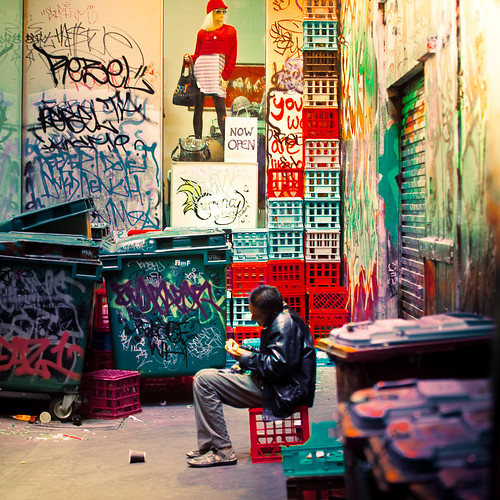
Cuba Gallery: Melbourne / Graffiti / Color / Portrait / Grungy / Urban / Street photography by ►CubaGallery


photo source


Photography isn't just about making memories, it's about art. Be artistic. Here are a few tips and tricks to help you make those photos, picture perfect.

To make those dull photos turn into works of art, consider these questions:
Decide if you want the full subject, half, or even a close up. How much background do you want, or even foreground? Exactly how close do you want that close up? What details do you want to focus on? Do you want a vertical, horizontal, or tilted photograph? What angle do you want? What's the best lighting? What background do you want to use?

1. Placing the subject of interest. Choose how much of the subject you want photographed. (Example: you want full body, half body, or face shot.) If your subject fills the frame then it's okay to center it. If you are trying to get more of the background, try placing your subject to the right or left in the viewfinder. With a horizontal (laying down), try to place them at the top for more foreground, or at the bottom for more background. And you could even tilt the camera for a more funky picture. It all depends on what part of the scenery you want visible in the picture. Maybe you want that tree to your left and your subject to the right. Or the patch of flowers in front and the mountains in back. (I find it best to take my time and take shots of each possible way and several different poses. This way I know I'll find the best photograph with the most potential.)

2. Don't center. The circle, plus sign, or brackets in the middle of your viewfinder is for focusing and isn't necessarily for centering the subject. Placing your subject in t he circle could leave you with a lot of empty and useless space on your photograph. Too much background and not enough subject. If your subject fills the frame then it is okay to center them. (Sometimes you just have to ignore the focus points and concentrate on your subjects placement in the frame instead.)

3. Camera angles. Walk around the subject, shoot from all angles and sides. This will help you to get the best lighting, background, and different aspects of the subject. You will want to find the best angle for all three. Pick a background that will not distract your viewers from the subject of interest. (I choose my backgrounds to where there's not much clutter. Sometimes I will use a plain sheet or blanket and place it behind the subject, but making sure it does not clash or blend.)

4. Reflectors. In some situations you just can't get enough light or you perhaps you just want more. To use a light reflector, place it in a position where it reflects light onto the subject without it getting in the frame. Use this if your shot is coming out too dark or there are too many shadows. On night shots that you need more than your flash can put out, place a lamp (or several) near your subject, but out of sight, and use the light reflectors to bounce from the lamps to where needed. (Some homemade light reflectors can be real cheap to make. You could use white cardboard, or if you can't find this, then simply take any piece and paint it white. For more light, place tin foil over your piece of cardboard, smooth it out, and reflect where needed.)

5. Shading. Using the same piece of cardboard as mentioned above, you can use this to block the light as well. You could make this easier by painting one side white and the other black. Or just place the piece in front of the lamp or sun to dismiss light from your subject. On most cameras you can use a sunshade for the lens, some cameras come with this, some you buy separate. This won't keep light from your subject, but it will block the light from causing a flare effect on the outcome of your photograph. The sunshade just clicks into place around your lens, and keeps the lens safe from any glaring.

6. Outside daylight. Direct sunlight is when you place the sun behind the camera, but in front of the subject. Using direct sunlight can cause shadows on the subjects face and possibly their eyes squinting. Back light is when the sun is behind the subject and in front of the camera. This will lighten the photo and cause much softer features on the subject.

7. Preventing red eye. Red eye is caused when the flash is too close to the lens. Ways to prevent this are: Attach a larger flash to your camera, t his way the flash is further from the lens. Or if buying a camera, look for one with the flash located far from the lens. Try getting closer to your subject when needing the flash. (Before I bought my camera with built in red eye correction, I had to use a photo editing program to correct these problems. I was even scanning my pictures and still having to edit when I was using my film camera that was hopeless against red eye.)

Saturday, February 26, 2011

10 Great Tips to Make Any DIY Winter Wedding Photography Successful!


Edinburgh Photography, Dancing in the Street by John Gilchrist


credit,image source


This winter many couples are choosing do it yourself wedding photography in an attempt to save money. Wedding photography is tricky because if not done right there will be no good documentation of the special day. My dad does wedding photography as an amateur hobby; wedding photography is not skill less, but can be done easily with practice by almost any amateur photographer. This article will take a look at 10 tips to make DIY winter wedding photography successful; however keep in mind DIY wedding photography takes copious amounts of editing after the ceremony.

1. Camera

Taking wedding photographs should be done with the right camera, not a regular point and shoot camera. I recommend using the Canon EOS Digital Rebel XTi, it takes high quality pictures and is relatively easy to use. This camera can be found at www.buy.com for $569.95, but you should check to see if anyone in the wedding party can provide this camera or a similar model to save on money.

2. Flash

Relying on the built in pop up flash in any camera is a recipe for failure; you will want to use an external flash for low lighting pictures, such as a church or an evening reception. Winter conditions outside will not require a flash due to the reflection of the snow, but it can be used if done right; however inside you will want a powerful flash. I cannot give a recommendation because certain flashes work for different cameras; therefore the flash will be determined by your digital camera choice. www.ritzcamera.com has a good variety of flashes, lenses, and cameras.

3. Lenses

Unfortunately DIY picture taking is not cheap and requires the proper zoom lenses for great photos from anywhere in the room. Buying any secondary lenses is not necessary, but they will make the pictures better. www.ritzcamera.com has a good selection of lenses; it is where I purchased mine.

4. Go Digital

The hardest part of DIY wedding photography is getting professional looking shots. Going digital allows for touchups on the pictures after they are taken so that they come out perfect. Going digital also saves on prints since all the photos can be saved on a flash drive or a CD.

5. Choose an artistic guest for the job

Capturing the right moment is what photography is all about; having a guest that is willing to take pictures who has an artistic eye is the best way to get quality shots. Do not expect a gift from the photographer as it takes hours of work to take and edit great shots.

6. Be aware of lighting conditions

Winter is the hardest time of the year to take photographs outside due to the reflective nature of snow and the brightness of the sun. Be creative on the angles of your photographs; many high end cameras also show the contrast ratio on the photos taken, look at the contrast to make sure the photos are coming out correctly.

7. Be aware of where the sun is

Do not shoot towards the sun or objects that are in the sun, it can cause shadows and some funky looking pictures. Just be aware of the sun and preview one or two pictures before taking more.

8. Capture photos with the theme

If your theme is a winter wonderland then capture that theme in the photos! Try to include shots of the bridal party and newlyweds in the natural theme of the wedding; also try to include guests in the same theme. Be creative with the shots, you may have to shoot at different angles to get the desired results.

9. Use the flash

Even in snowy conditions you should experiment with the flash for better pictures, the bright the background the more the object you are photographing will stand out. This may not always be the case; therefore you should check the pictures being taken to make sure they are coming out professionally.

10. Edit, Edit, Edit

No DIY photography is complete up completion of the ceremony! There are countless hours of editing that must be taken on to get professional looking results. If you do not have the proper computer skills try to find a guest that would be willing to help edit in exchange for their wedding present.

This site has some extra DIY tips that can help during a winter wedding; I did not cover many these tips, so it may be a good read: http://www.squidoo.com/weddingphotographyguide

Sources:

www.ritzcamera.com

http://www.squidoo.com/weddingphotographyguide, DIY Winter Wedding Photography

Upgrade Your Digital Photography Studio on a Budget


Cuba Gallery: Australia / Melbourne / Luna park / circus / retro / vintage / people / fun / scary / sepia / photography by ►CubaGallery


credit


Digital photography is progressing almost as fast as the computer industry. Mega-pixels are multiplying faster than you can count them. As with all advances in technology, a higher price tag is attached. So, how do you upgrade your digital photography studio with out breaking your budget?

Let's go over a few ways to do just that.

Upgrade your Digital Photography Studio - Don't Buy New

The more mega pixels the better, I know. But, if you are using a 5.0 mega pixel camera now, wouldn't a 6.0 one be an upgrade? There is no need to spend the extra $3000 to get the newest 10 mega pixel digital camera.

There are plenty of used camera stores to find newer equipment that will fit your budget as well. KEH offers a huge selection of both new and used digital camera equipment, all of which has been cleaned and tested.

Let's not forget about eBay either. The deals there on new equipment are sometimes better then buying older used equipment. You never know when some college kid is going to sell off his $3000 digital camera just so he can make rent.

Upgrade your Digital Photography Studio - Compensatory Upgrades
Find way to stream line your business. Odds are, you don't have a lot of people working at your digital photography studio. So, you probably wont be buying equipment that saves you money by eliminating workers. Still, there is always new software coming out to help you stream line your business.

Such software may be expensive at first, but will be worth the price. Even if the software does nothing more than free up two hours in your work day, that is two more hours to make money. That is two more hours to see customers. Those customers could then turn into lifetime customers who bring your repeat business and great word of mouth advertising. All because you freed up two hours in your work day.

Upgrade your Digital Photography Studio - Upgrade Only What You Need
Upgrading your digital photography studio doesn't mean you have to spend a fortune on new gear, lights, printers, computers, and what have you. Take some time to really identify what it is in your digital photography studio that needs to be upgraded.

Lets say you bought an expensive sub dye printer years ago to start printing photographs in house. 60,000 prints later, it's just not what it used to be. This doesn't mean you have fork over a huge amount of money to buy a new one. You could out source your printing for a while or you could even look into getting the printer refurbished by the manufacturer.

Upgrade your Digital Photography Studio - Upgrade Your Staff
Not every digital photography studio upgrade is a piece of expensive new gear. Invest some of your budget by training your staff. If you have other photographers working for you, try spending some money on a training workshop. The more your employees know about their job, the better they are at it. These workshops will help increase your staffs skills, but it will also help them get a better picture of what you want. Being on the same wavelength with your employees will also help them operate more efficiently

If you have complicated software programs, consider having a sales rep come out and teach your staff about the software. This goes back the same point, the more your employees know, the better they operate. Often, sales reps will be more than happy to come out and teach refresher courses or how to use new programs free of charge. After all, the happier you are with their product, the more you will buy from them in the future.

These are just a few ways to upgrade your digital photography studio with out breaking your budget. There are always ways to pinch pennies if you think about. The biggest obstacle to get over is the, must have the new stuff, mentality. You almost never need the new stuff, it is almost certainly nothing more than a want. Think before you buy and you are sure to save money in the now and make more in the future.